Mako spine
We understand how important it is for you to know what to expect from your back surgery experience. As you read through this material, please reach out to us to discuss any questions you may have.
Every patient is unique and can experience back symptoms for different reasons. Issues with your back can cause a range of symptoms from outright pain in your back, to pain, numbness, or tingling in your buttocks and legs, and even weakness in your arms or legs.
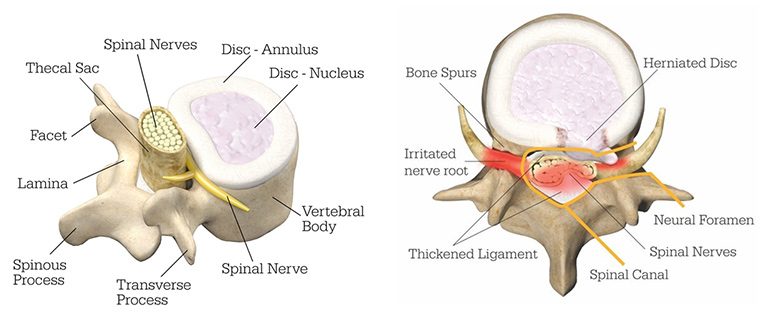
You may be experiencing mechanical pain because of a breakdown or inflammation in the mechanical components of the spine that create movement – the discs, facet joints, ligaments, or muscles. Or, you may be experiencing neurological pain because the spinal canal has been narrowed or compromised, causing irritation of the spinal cord or spinal nerves, which in turn can cause pain in the back, or numbness or weakness in the legs.
It’s important to talk with us about the reason for your back symptoms so you can understand the treatment options available to you.
If you haven’t experienced satisfactory relief of symptoms with medication and/or other non-surgical treatments, you may be a candidate for back surgery with the assistance of Mako Spine. Surgery may allow you to gradually return to some or all of your activities of daily living. Talk with your doctor about your potential benefits and risks.
How Mako Spine works
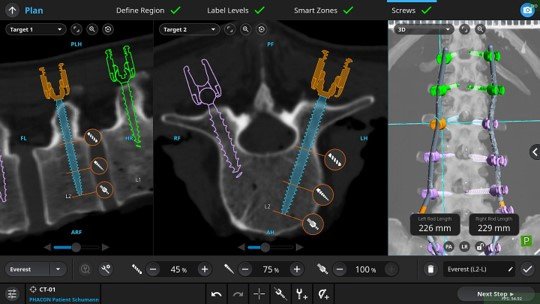
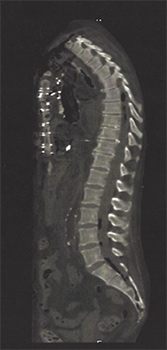
Scan. It starts with a CT scan that, with specialized Mako Spine software, produces a 3D virtual model of your unique anatomy. This model helps doctors see things they can’t typically see with an x-ray alone.
Plan. The virtual model created from your CT scan helps your surgeon create a patient-specific surgical plan before you undergo surgery. On the day of surgery, the surgeon aligns your anatomy with the Mako Robotic-Arm through a process called registration: Tracking devices placed on the body, or attached to specific vertebrae (the 33 bones that make up the spine), allow Mako Spine to match the virtual 3D image with your actual anatomy.
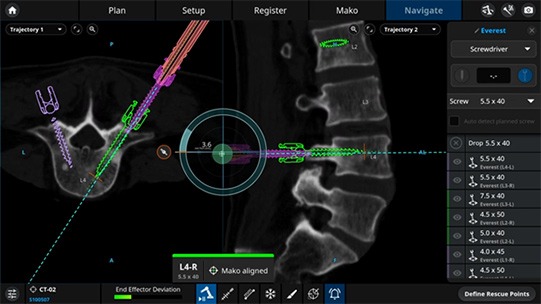
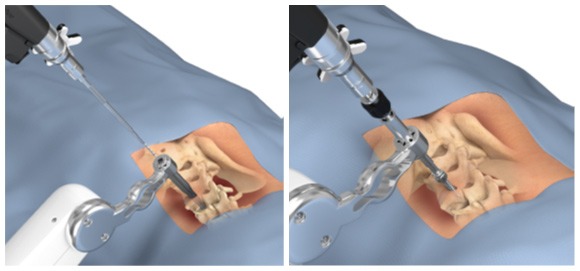
Mako Can. Most back and spine surgeries involve several steps that may include accessing the affected area of the spine, removing diseased or damaged bone or disc material, placing an orthopaedic implant, and securing the implant or bone with specialized implantable screws – a process refers to the surgical stabilization of the vertebrae (spinal bone) using specialized implants called screws and rods.
Mako Spine is designed to provide your surgeon with accurate trajectory guidance (the angle at which your implantable screws are inserted) during the fixation step of spine surgery.1
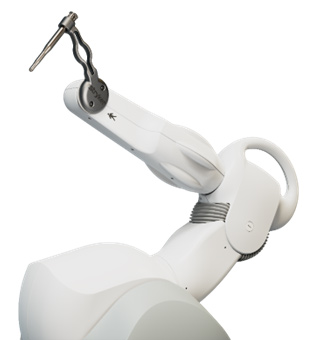
When reaching this step in the operating room, your surgeon positions the Mako Robotic-Arm over the surgical site. Mako Spine is designed to align to your personalized surgical plan. Once aligned, Mako Spine holds a guide tube in place, allowing your surgeon to “prepare the bone” or use instruments to make holes through the bones that connect the back of the vertebrae to the vertebral bodies in the front of the spine. These connecting bones are called pedicles, and the specialized implantable screws placed into them are called pedicle screws. Once the bone is prepared, Mako Spine helps your surgeon place the pedicle screws as planned.
Mako Spine also features AccuStop™ haptic technology. This technology helps provide stability and guide your surgeon within a pre-planned placement angle suggested by the software and confirmed by your surgeon, based on your unique anatomy.
What is fixation?
Spine surgery generally involves several steps that may include accessing the affected area of the spine, removing diseased or damaged bone and/or disc material, placing implants, and securing the spinal bones with specialized implantable screws – a process referred to as fixation. Fixation refers to the surgical stabilization of the vertebrae (spinal bones) using specialized implants called screws and rods.
Common back surgeries that may include fixation
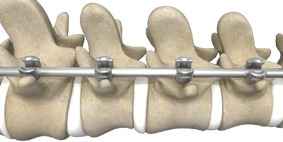
Spinal fusion
Permanent connection of two or more vertebrae in the spine, eliminating motion between them. Spinal fusion involves techniques that are designed to mimic the normal healing process of broken bones.
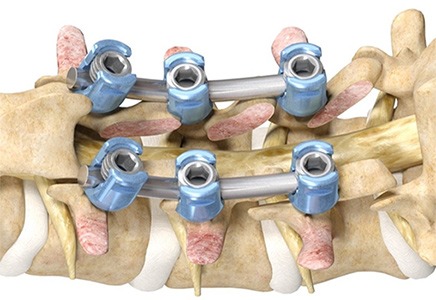
Spinal decompression (laminectomy and fusion)
Spine surgery that involves the removal of bone, placement of specialized implantable screws, and spinal fusion*
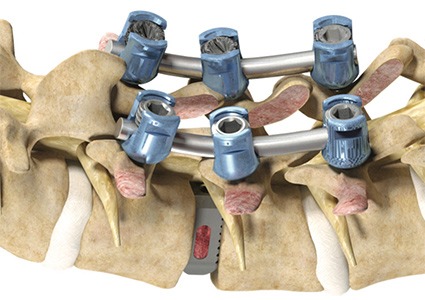
Lumbar interbody fusion
Spine surgery that involves the removal of degenerated disc material, placement of implants in the disc space, placement of specialized implantable screws, and spinal fusion*
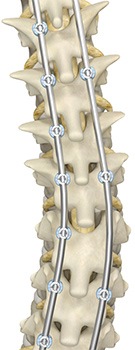
Scoliosis correction
Spine surgery that involves the removal of bone to help restore flexibility to the spine and allow for correction of the curve, placement of specialized implantable screws, and spinal fusion*
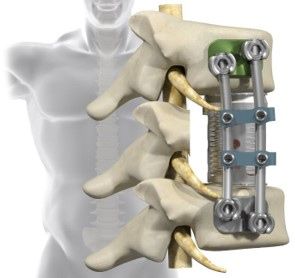
Vertebral body replacement
Spine surgery that involves the removal of damaged vertebral structures, placement of implants to replace the vertebral structures, placement of specialized implantable screws, and spinal fusion*
* The placement of implants is intended to assist in a healing process called spinal fusion. If successful, spinal fusion will typically take place on its own in the weeks and months following surgery and can be assessed by your surgeon on imaging studies (e.g. x-rays) taken during follow-up visits.
Important information about spine surgery
In general, surgical treatment options presented by your surgeon are aimed at relieving pressure on nerve roots in an attempt to address pain or other symptoms.
Some of the images on this website depict Stryker’s products. Please speak to your doctor if you have questions about these products or anything else in this website.
The information presented is for educational purposes only. Please speak to your doctor to decide if spinal surgery is right for you. Only your doctor can make the medical judgment regarding which products and treatments are right for your own individual condition.
As with any surgery, spinal surgery carries certain risks. Your surgeon will explain all the possible complications of the surgery, as well as side effects. Each spinal surgery patient will experience a different post-operative activity level, depending on his/her own individual clinical factors. Your doctor will help counsel about how to best maintain your activities in order to recover properly from your surgery. Such activities include not engaging in high-impact activities that could de-stabilize any instrumentation that may have been implanted.
Stryker Corporation or its divisions or other corporate affiliated entities own, use or have applied for the following trademarks or service marks: AccuStop, Mako, Stryker. All other trademarks are trademarks of their respective owners or holders.
Ask your doctor if spine surgery is right for you.
© Content from patientwebsitecontent.com